
Never touch tensioned spring
What you should not do is touch a torsion spring under tension. These springs store enough force to break a wrist or worse, and the winding bars and cone setup aren't something to improvise with a socket wrench.
McAllen, TX
Keep your garage door running through McAllen's long cooling season. Regular tune-ups catch worn springs and cables before heat and years take their toll.
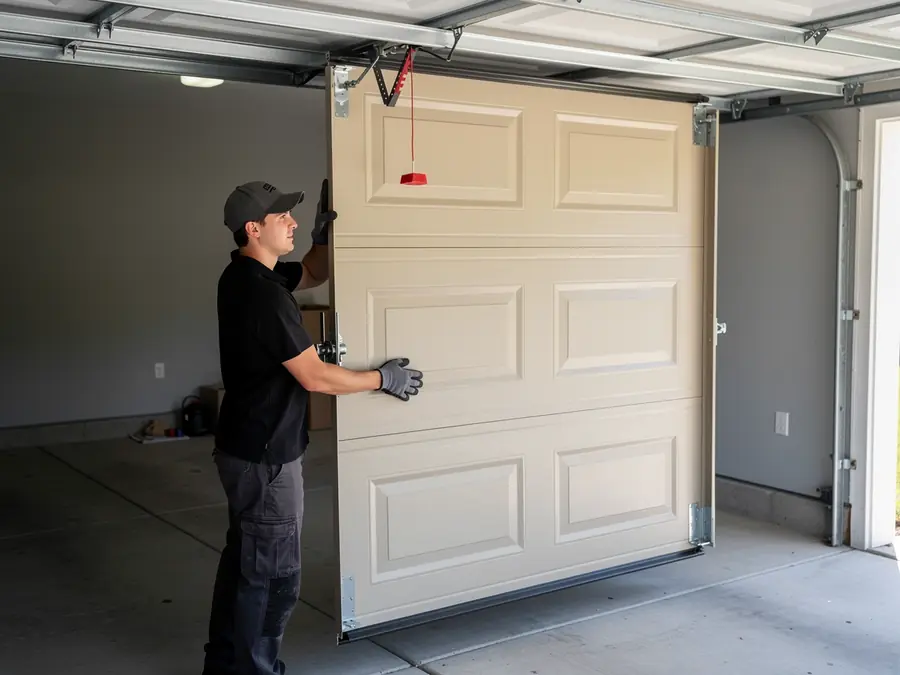
The repair
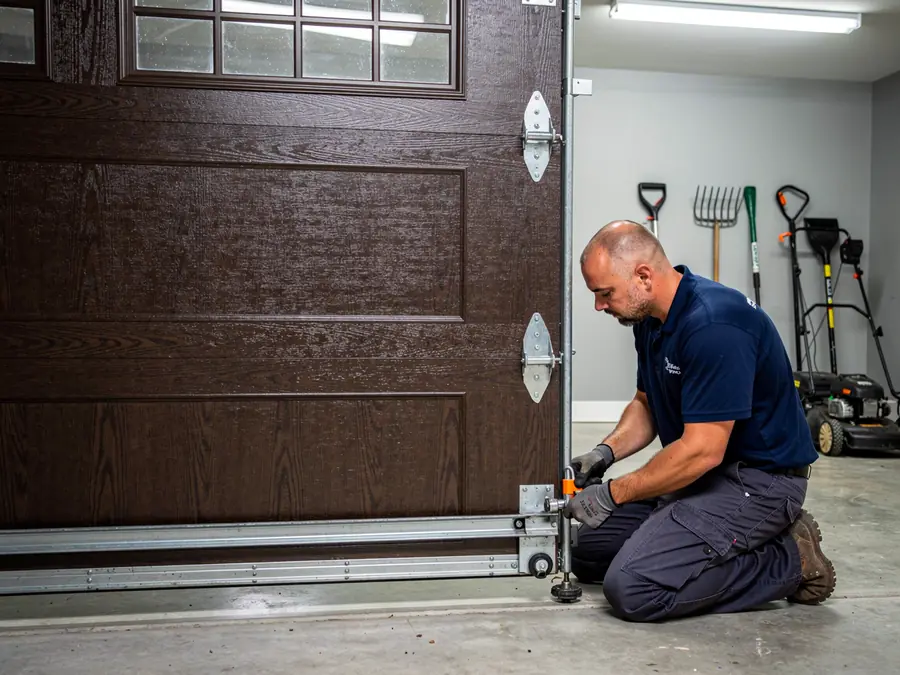
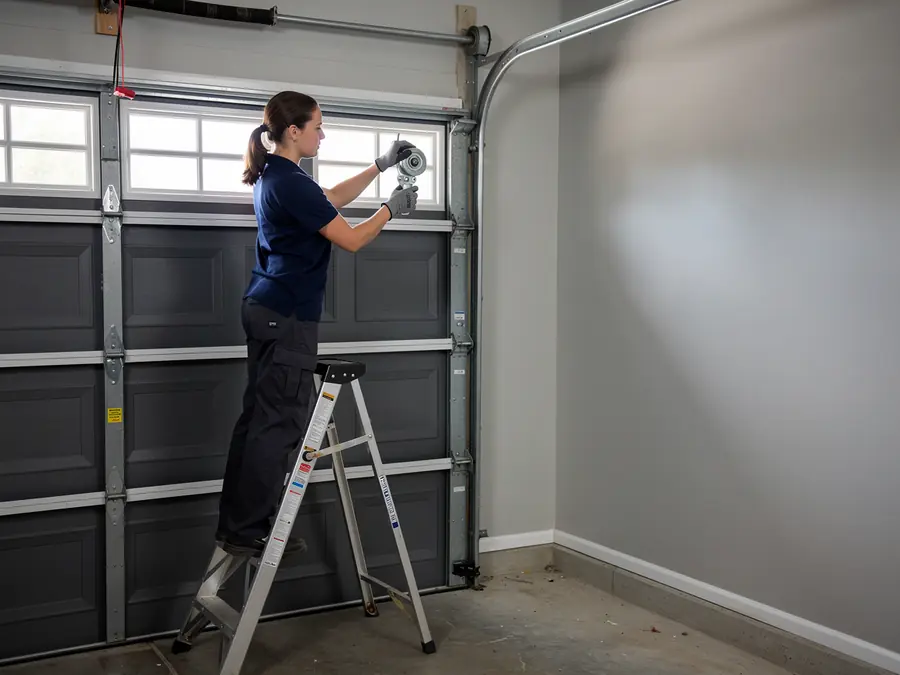
A real maintenance visit isn't a squirt of WD-40 and a wave goodbye. We check torsion spring tension against the door weight, inspect cables for fraying at the drum, and pull every roller to look for flat spots or cracked nylon.
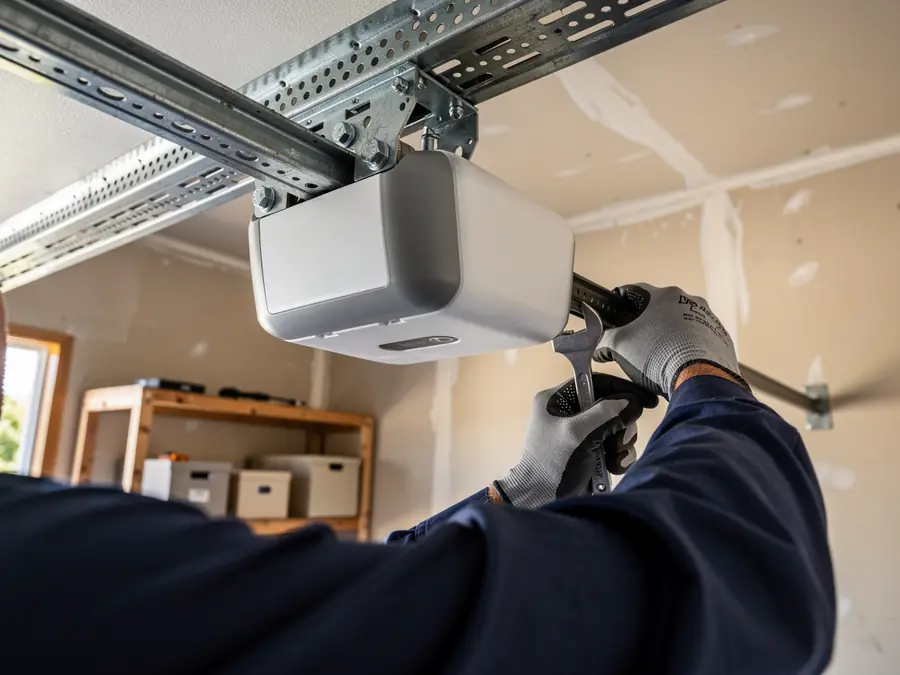
Track alignment gets checked with a level, not a glance, because a quarter-inch of drift at the bottom bracket turns into binding at the top. We test the opener's force settings and auto-reverse, since a door that slams the last six inches is usually one bad limit switch away from a cracked panel.
Most of the homes across our service area went up between 1987 and 2005, so we're commonly working on original hardware that's now two to three decades old. That means galvanized springs rated for a certain cycle count that's long since been used up, and steel rollers that were never meant to outlast the house.
We lubricate hinges, rollers, and the torsion shaft with the right grease for this climate, not a generic can off a shelf. We don't repaint doors or patch stucco around the opening - that's outside what a maintenance call covers, and we'll tell you plainly if a job needs a different trade.
DIY or pro
You can do some of this yourself. Wiping down tracks, checking that the photo-eye sensors are aligned, and visually inspecting cables for rust are fine weekend jobs.
What you should not do is touch a torsion spring under tension. These springs store enough force to break a wrist or worse, and the winding bars and cone setup aren't something to improvise with a socket wrench.
The other thing homeowners get wrong is assuming a noisy door just needs oil. Sometimes it does. Sometimes the noise is a bearing plate starting to fail, and lubricant just masks it for another month until it fails on a Saturday with the car trapped inside.
If your door is original to a house built in the late 1980s or 1990s - common across this area - age alone is a reason to have someone who does this daily look at the spring and cable condition rather than guess. We'd rather spend ten minutes telling you it's fine than charge for a service call you didn't need.
Warning signs
Neglected maintenance in this climate doesn't always announce itself with a loud bang. More often it's a door that starts dragging on its tracks by midsummer, because heat has dried out the lubricant faster than it would in a cooler region and metal-on-metal friction is doing work the rollers used to do. Nylon rollers that have gone brittle from UV and heat exposure will shed small plastic chips near the track - easy to miss until one jams.
You'll also see openers working harder than they should: longer travel time, a grinding sound at the top of the cycle, or a remote that used to open the door in one press now needing two or three tries. On older torsion systems, a spring nearing the end of its life often makes a sharper, higher-pitched sound on each cycle before it eventually snaps. None of these are emergencies on day one. Left alone through another few months of heat, they usually become one.
Local causes
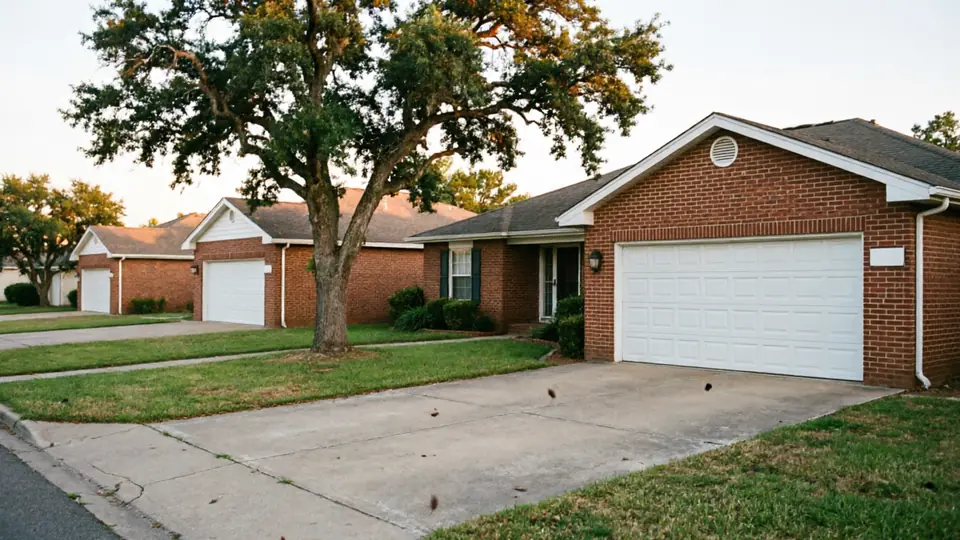
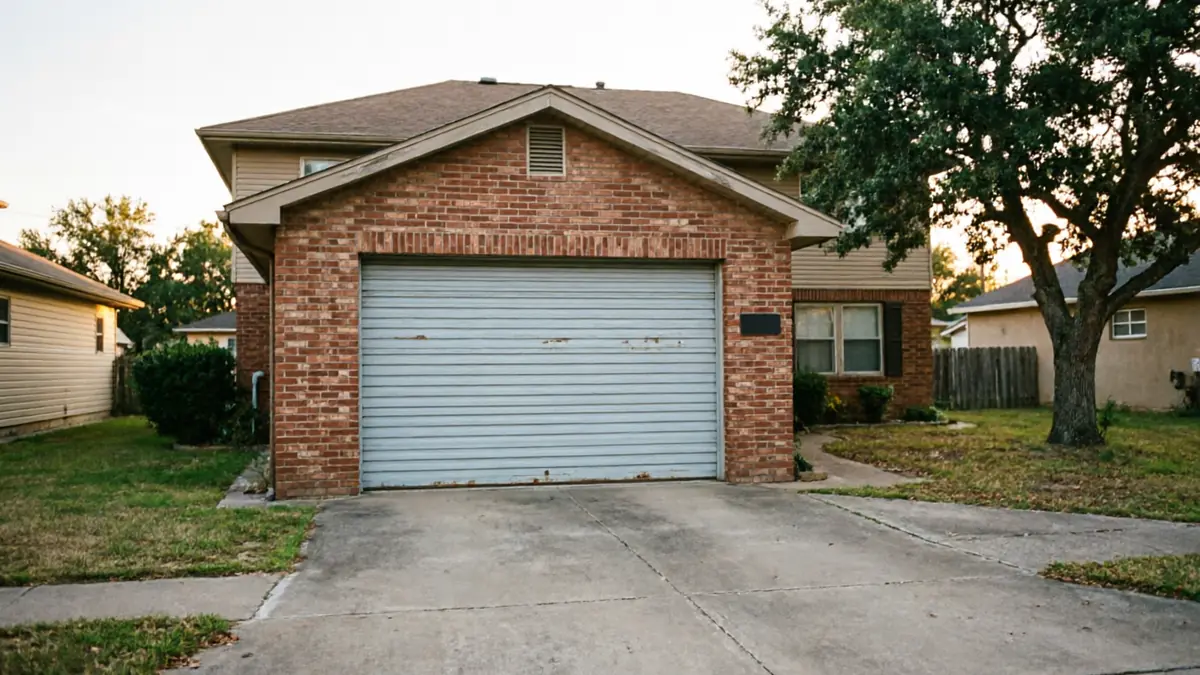
This isn't a generic wear-and-tear story - it's specific to what's built here and how hot it gets. The service area's housing stock is mostly 1980s and 90s construction spread across more than thirty named communities, which means a lot of garage doors are running original torsion springs and openers that are 20 to 35 years old. Add in a severe-heat climate band, and you get lubricant that dries out faster, nylon rollers that go brittle sooner, and steel components that expand and contract through wider daily swings than they would somewhere milder.
Across roughly 98,000 households in the area, about 52,042 are owner-occupied houses - a lot of individual garage doors aging on the same rough timeline. With median household income here at $48,777, most of the owners we talk to would rather spend on a seasonal tune-up than risk an after-hours emergency call when a spring finally lets go. That's the math behind maintenance: it's cheaper to replace a $20 roller on your schedule than a broken spring and a dented panel on its.
Questions
Once a year is a reasonable baseline for most doors here, but if your house was built in the 1980s or 90s and still has original hardware, twice a year gets ahead of problems before the heat season peaks. Doors used multiple times a day wear faster regardless of age.
Lubricating hinges and rollers yourself is fine and worth doing. What you can't check safely yourself is spring tension and cable condition, since both are under load and can cause injury if they let go. A full maintenance visit covers what a can of lubricant can't.
Heat dries out lubricant faster and can cause metal components to expand slightly, which shows up as extra friction and noise at the rollers and hinges. If the sound has a sharp, high-pitched edge on each cycle, that's often a spring nearing the end of its life rather than just needing oil.
Explore more
Ready when you are
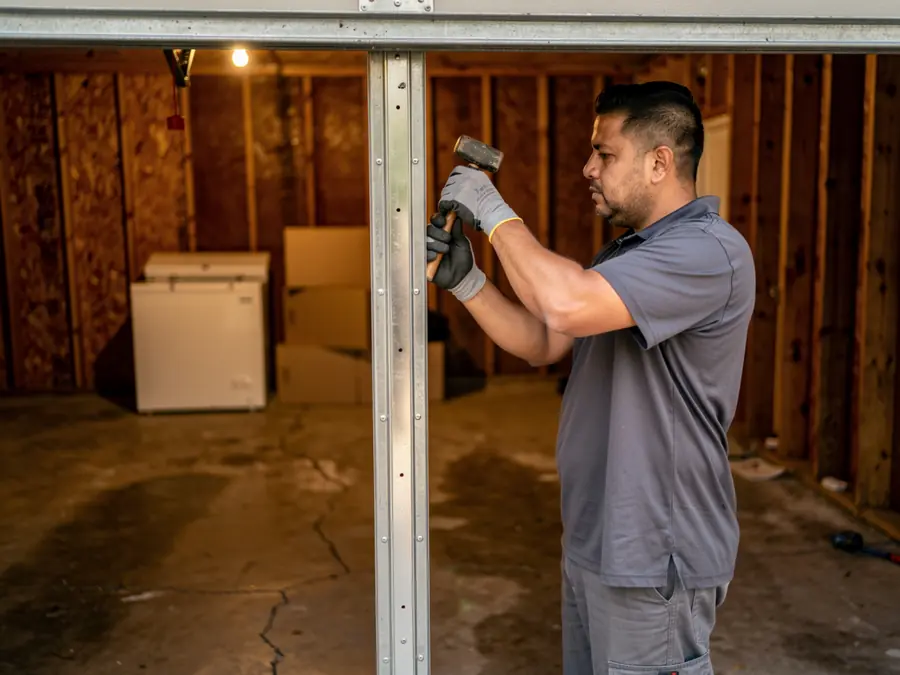
McAllen Garage Door Pros repairs and installs garage doors, springs and openers in McAllen, TX and the surrounding area.