
Sensor and force risk
Where it gets risky is the safety sensor alignment and the force setting - get those wrong and the door either won't reverse on an obstruction or it reverses on nothing, which means it never closes all the way.
McAllen, TX
Opener installation and replacement for McAllen homes built mostly from the late 1980s through the mid-2000s, sized for Rio Grande Valley heat. Call for a quote.
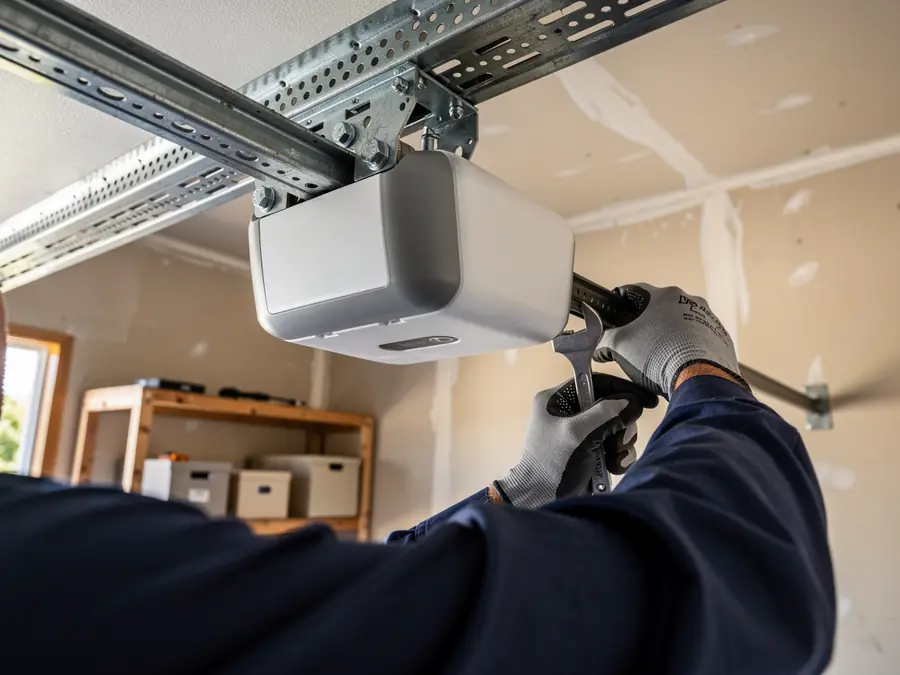
The repair
A straight opener swap on a standard residential door usually runs a few hours start to finish: pulling the old unit down, checking the header for a solid mounting point, running new wiring or confirming the existing run is usable, hanging the new motor head, and setting travel limits and force so the door doesn't slam the floor or fight the top of the track.
If the door is original to a house from the late 1980s or 1990s, the bracket spacing and rail length on the new opener often don't match the old mounting holes, so there's drilling and sometimes a new header bracket involved.
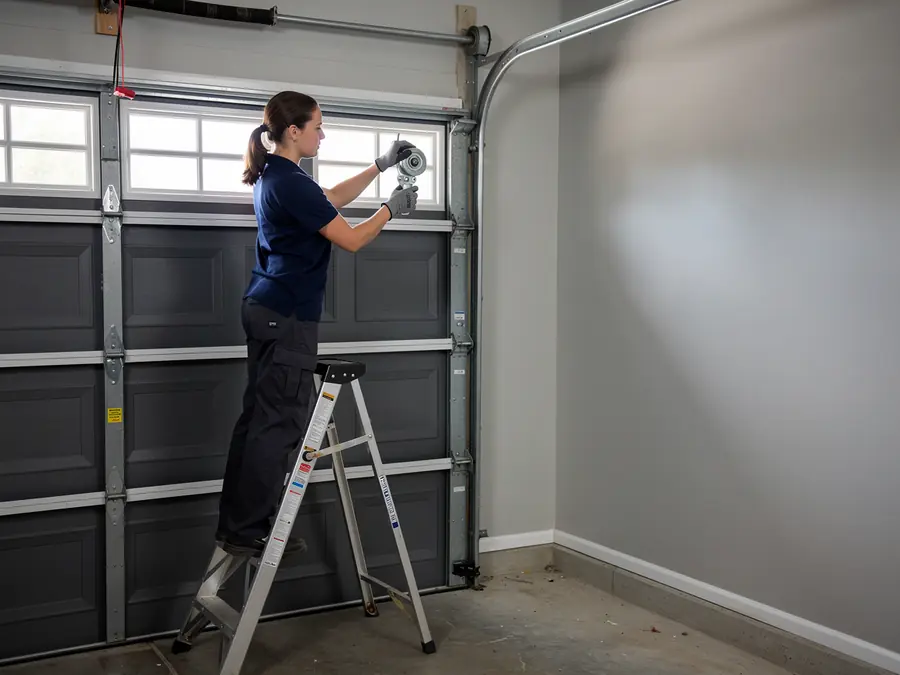
We also check the springs while we're up there - an opener fighting worn springs will burn itself out early, and that's not a callback we want to make. If the existing wall button, safety sensors, or the wiring itself are original equipment, we replace those as part of the job rather than bolt a new motor to thirty-year-old sensors that may not trip reliably anymore.
We won't install a new opener on a door with a cracked or badly sagging section - that's a door problem, not an opener problem, and doing it anyway just gives you a new motor lifting a bad door.
DIY or pro
Opener kits are sold at every hardware store in the Valley, and plenty of homeowners get through the install fine on a lighter single door.
Where it gets risky is the safety sensor alignment and the force setting - get those wrong and the door either won't reverse on an obstruction or it reverses on nothing, which means it never closes all the way.
In a service area where a lot of the housing stock dates to the 1987-2005 window, we also run into openers mounted to headers that were framed for a lighter, older-style door, and a DIY install sometimes misses that the header itself needs reinforcing before a heavier unit goes up. If your garage ceiling is low or the door is a double-wide 16-footer, the leverage and weight involved change fast.
We're not going to tell you it can't be done at home - for a lot of single doors it can. We will tell you that the sensor height, the auto-reverse force test, and the header check are the three steps that get skipped most often, and they're the three that matter most for safety.
Warning signs
The usual sign isn't total failure - it's a motor that runs louder every month, a door that hesitates halfway up, or an opener that strains and clicks before it finally catches.
In homes across the service area with original garage hardware from the 1990s building wave, the opener motor itself often outlasts the capacitor or the drive gear, so you get a unit that still powers on but can't move the door the last foot without help.
Heat is a factor too - McAllen and the surrounding towns sit in a severe-heat climate band, and an attached-garage opener running in a space that holds high temperatures for months at a time ages faster than the same unit would somewhere milder.
Belt and chain drives stretch under that kind of sustained heat load, which shows up as a door that lags behind the remote signal by a second or two before it starts moving. A battery backup unit that won't hold charge through a summer afternoon is another sign the internal components have had enough.
Local causes
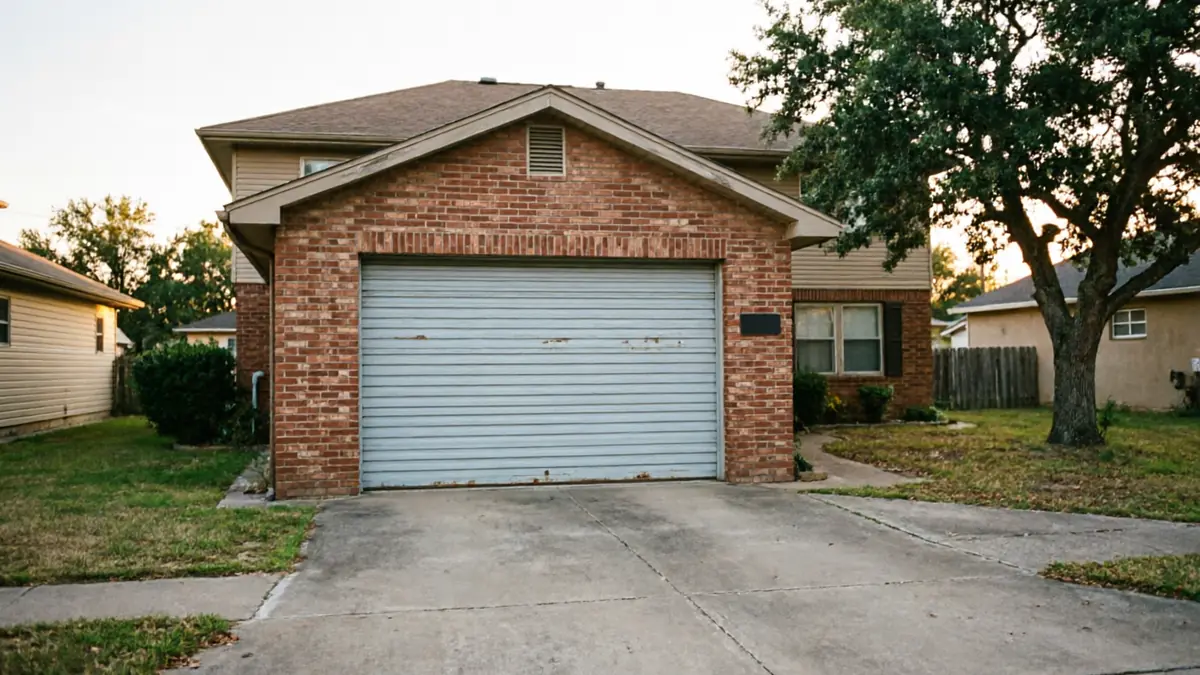
Housing across this service area - more than 52,000 owner-occupied houses out of roughly 98,000 households, mostly built between 1987 and 2005 - was framed for the openers of that era: lighter-duty motors, simpler safety sensors, and headers sized for the doors sold at the time. Pull one of those original units today and you're often looking at a motor rated well under what current code and current door weights call for. Add the severe-heat climate this part of the Valley sits in, and attached garages routinely run hot enough, long enough, to shorten belt and gear life well below what the same opener would see in a cooler region. That combination - older original equipment plus sustained heat exposure - is why opener replacement shows up so often as a standalone job here rather than tagging along with a full door replacement. Across towns in this service area, from Palmhurst and Pharr in close to Alton, San Juan, and out to Weslaco and Edcouch, the housing age and the heat load are consistent enough that it's the same failure pattern we see on nearly every call for this job.
Questions
A standard single-door swap usually takes a few hours. It runs longer if the header needs reinforcing for a heavier unit or the wiring and sensors need full replacement rather than reuse - both common on homes with original 1990s-era garage hardware.
Often yes, but we check the door and springs first. An opener fighting a door with worn springs or a sagging section will fail early. If the door itself is the problem, fixing the opener alone won't solve it.
This area sits in a severe-heat climate band, and attached garages hold high heat for months. Belts, gears, and capacitors age faster under that load, so openers that ran fine in spring often start lagging or straining once summer temperatures set in.
Yes, this is a service-area-wide job covering McAllen and the surrounding towns out to roughly Weslaco and Edcouch. Local specifics for each town are covered on that town's own page.
Explore more
Ready when you are
McAllen Garage Door Pros repairs and installs garage doors, springs and openers in McAllen, TX and the surrounding area.